

Pilot One
How to Read a METAR: A Student Pilot Guide to Wind, Visibility, Ceiling, and QNH

How to Read a METAR: A Student Pilot Guide to Wind, Visibility, Ceiling, and QNH
If you are learning to fly, METARs can look more complicated than they really are. The key is not to decode every token at once. The key is to read the report in the same order you would brief a real flight: wind first, then visibility, then cloud ceiling, then pressure, then anything that could change the plan.
Quick Answer
A student pilot should read a METAR in five steps: check the wind, confirm visibility, identify the lowest operational cloud layer, set QNH correctly, and look for weather or trend information that could turn a comfortable VFR flight into a marginal one.
What a METAR Actually Tells You
A METAR is a snapshot of current weather at an aerodrome. It does not tell you the whole story for the route, the next hour, or nearby terrain. It gives you a current reference point for decision-making.
For a VFR student pilot, that snapshot matters because it affects:
- runway choice and crosswind
- visibility and workload
- ceiling and terrain clearance
- altimeter setting
- whether the conditions are stable or getting worse
The 5 Parts That Matter Most
| METAR part | Example | What it means operationally |
|---|---|---|
| Wind | 22012KT |
Check runway alignment, gusts, and crosswind exposure. |
| Visibility | 9999 |
Good general visibility, but still compare with haze, terrain, and sun angle. |
| Clouds | SCT025 BKN040 |
Scattered at 2,500 ft and broken at 4,000 ft. The broken layer may become your practical ceiling. |
| Temperature / Dew Point | 24/14 |
Helps you judge moisture, haze, and cloud risk. |
| Pressure | Q1018 |
Set the altimeter correctly before taxi and again if conditions change. |
Read a METAR in This Order
1. Wind
Wind is the first operational filter. A legal VFR day can still be a poor training day if the crosswind is above your experience level.
Ask yourself:
- Which runway is likely in use?
- Is the wind mostly headwind, mostly crosswind, or shifting?
- Are there gusts that will raise workload?
If the runway wind picture is not obvious, use the Pilot One METAR Decoder together with the crosswind calculator.
2. Visibility
Good visibility is not only about legality. It is about how early you can identify terrain, traffic, reporting points, and runway references.
9999 usually means visibility is 10 km or more, which is encouraging, but do not stop there. Haze, low sun, smoke, or localized moisture can still make a VFR flight feel much tighter than the number suggests.
3. Cloud Layers and Ceiling
Student pilots often see SCT or BKN and move on too quickly. That is a mistake.
For VFR thinking, ask:
- Is there a broken or overcast layer that limits altitude options?
- Will the reported base leave enough margin above terrain and obstacles?
- Could a scattered layer become operationally restrictive along the route?
If you want a fast sense check, the cloud base calculator can help you compare temperature and dew point with the reported sky condition.
4. Temperature, Dew Point, and QNH
Temperature and dew point tell you how close the air is to saturation. A small spread can support mist, low cloud, or a deteriorating morning picture.
QNH matters because a weather report is not useful if your altimeter is wrong. A poorly set altimeter can quietly distort every altitude decision you make in the circuit or en route.
5. Significant Weather and Trend
Look for anything that changes your comfort margin:
- rain or showers
- thunderstorm risk
- mist or fog
NOSIG,TEMPO, or other clues that the weather may hold or change soon
Current weather is only one piece. Pair the METAR with TAF, NOTAMs, and your route weather briefing.
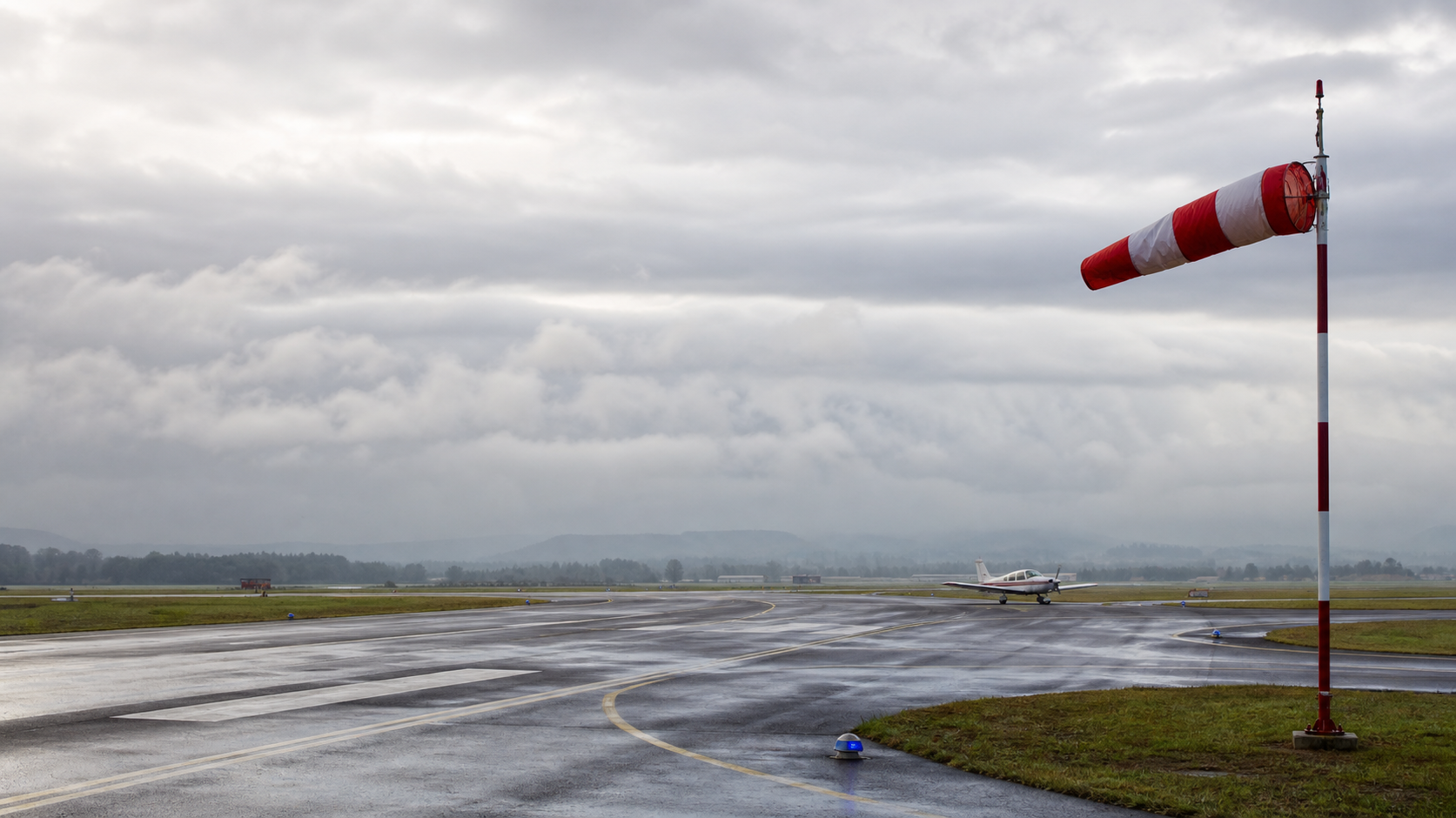
Example METAR, Broken Down
Take this example:
LEMD 201030Z 22012KT 9999 SCT025 BKN040 24/14 Q1018 NOSIG
Here is the practical read:
LEMD: the station is Madrid.201030Z: observation on the 20th at 10:30 UTC.22012KT: wind from 220 degrees at 12 knots.9999: visibility 10 km or more.SCT025: scattered cloud at 2,500 ft.BKN040: broken cloud at 4,000 ft, likely the operational ceiling to watch.24/14: temperature 24 C, dew point 14 C.Q1018: altimeter setting 1018 hPa.NOSIG: no significant change expected in the short term.
That does not automatically mean "go". It means the current picture looks orderly, and your next step is to compare it with runway, route, alternates, terrain, and your personal limits.
METAR vs TAF: Do Not Confuse Them
A METAR tells you what the weather is now. A TAF tells you what forecasters expect over the next period.
Student pilots often brief only the current METAR because it feels concrete. That is not enough. A comfortable departure can still lead into worsening cloud, stronger wind, or lower visibility later in the flight.
Common Student Pilot Mistakes
Mistake 1: Looking at Visibility Before Wind
Many students want one simple number that says "good" or "bad". In real operations, runway wind can be the first reason to delay or change the plan.
Mistake 2: Treating Every Cloud Layer the Same
FEW, SCT, BKN, and OVC are not equally important. The lowest operationally restrictive layer deserves most of your attention.
Mistake 3: Reading the METAR Without the Route Picture
An aerodrome can report decent conditions while the route or destination is worse. Always widen the picture.
Mistake 4: Forgetting Personal Limits
A METAR can be legal and still be a poor match for your current training stage. Use instructor guidance and honest self-assessment.
A Simple VFR Weather Flow
Use this sequence before flight:
- Read the latest METAR.
- Cross-check runway wind and crosswind component.
- Identify the lowest practical ceiling.
- Compare the report with TAF, NOTAMs, and terrain.
- Decide whether the weather fits both legal minima and your current skill level.
How Pilot One Helps
Pilot One is useful here because it turns raw weather into an operational briefing instead of a memory test.
You can use:
- the METAR Decoder to read wind, ceiling, pressure, and recent history faster
- the crosswind calculator to translate runway wind into a training decision
- the density altitude calculator when hot weather starts affecting performance
FAQ
Do I need to memorize every METAR code?
No. You need to reliably interpret the parts that change your decision. Over time, common codes become natural.
What is the most important part of a METAR for student pilots?
There is no single winner, but wind and ceiling are often the fastest operational filters for training flights.
Is 9999 always enough for a comfortable VFR flight?
Not always. Terrain, haze, sun angle, route complexity, and your experience level still matter.
Is the latest METAR enough to make a go or no-go decision?
No. Use it with TAF, NOTAMs, route weather, and instructor judgment.
Final Thought
Reading a METAR well is not about sounding technical. It is about building a calm, repeatable weather briefing. If you read the report in the same order every time, your decisions become faster, clearer, and safer.